.svg)


Dynamics 365 for Plastics and Packaging Manufacturers in Saudi Arabia and UAE
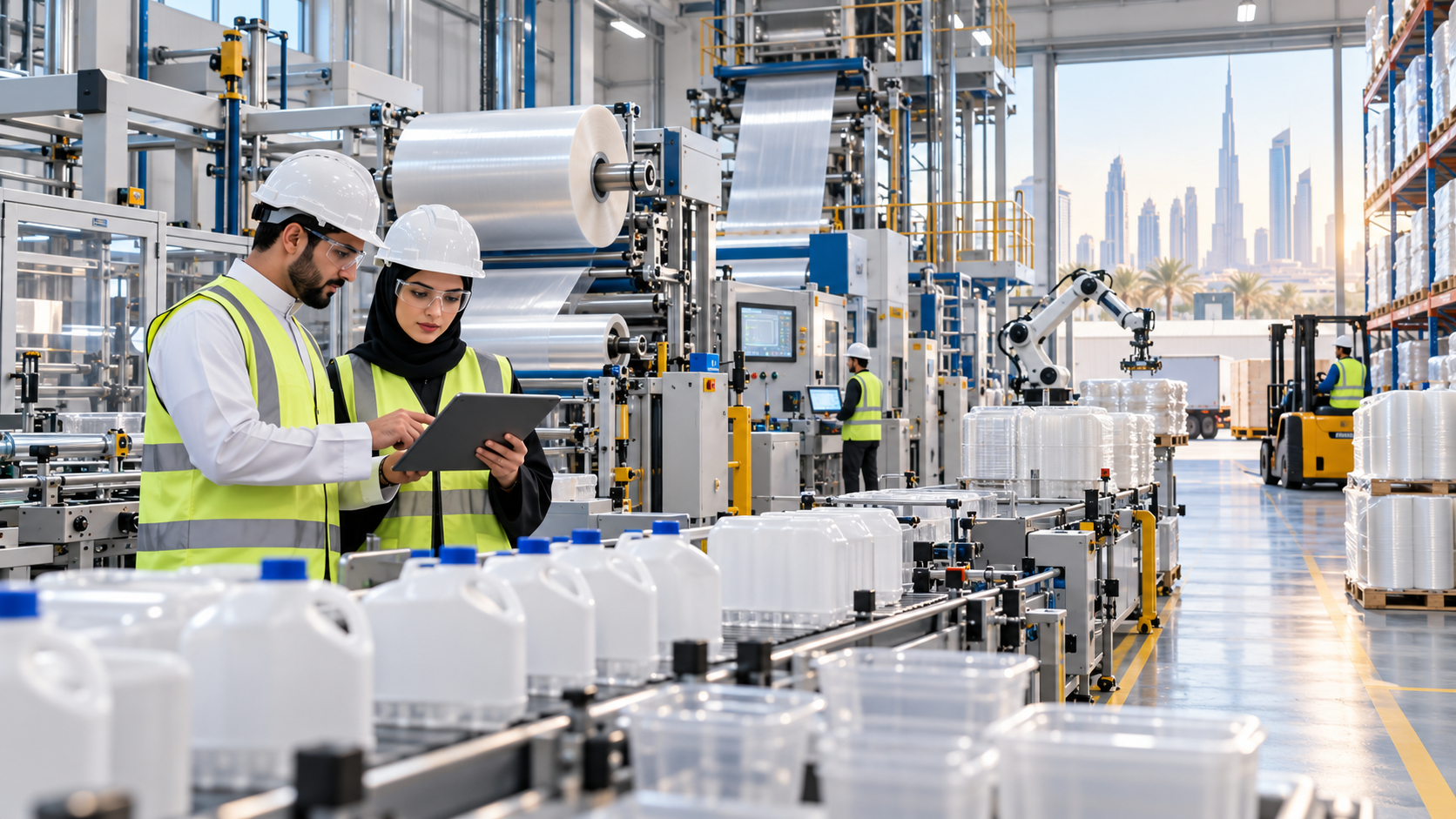
Plastics and packaging manufacturers in Saudi Arabia and the UAE operate in one of the most demanding production environments in the GCC. High-volume scheduling, material cost pressure, batch quality governance, and the need for real-time visibility across plant, warehouse, and finance operations leave little margin for the kind of disconnected systems that most manufacturers still rely on.
Terracez works with plastics and packaging organisations across Saudi Arabia and the UAE to design the production operating model, align leadership across operations, procurement, quality, and finance, and deliver Dynamics 365 programmes that produce measurable operational improvement — not just system coverage.
"Terracez team is a great consultancy, which follows an agile approach to solve any kind of business issues. We are adding a lot of automation with their experienced and highly-skilled team in the manufacturing domain." Zubair N. Kozhissery, IT Head — Arnon Plastic Industries KSA
The Plastics and Packaging Manufacturing Challenge
Plastics and packaging manufacturing is not a generic industrial problem. The operational complexity is specific: resin and raw-material planning tied directly to production schedules, batch quality governance that must function across multiple production lines, yield and scrap tracking that directly affects cost per unit, and procurement cycles that need to respond to material price volatility without disrupting plant output.
Saudi Arabia's manufacturing sector is projected to reach USD 211.8 billion in 2026, growing at 7.4% year on year, with packaging and plastics among the priority sectors under the National Industrial Development and Logistics Programme. The UAE packaging market is estimated at USD 11.41 billion in 2026, driven by sustainability compliance, e-commerce demand, and FMCG supply-chain requirements. Both markets are expanding rapidly — and both are raising the bar on operational maturity.
The challenge is not finding an ERP. The challenge is implementing one in a way that reflects how a plastics or packaging plant actually operates.
Why ERP programmes fail in plastics and packaging
Most ERP failures in this sector share the same root causes:
- Bills of materials and routings are incomplete, inconsistent, or maintained outside the system
- Production scheduling is managed manually, disconnected from material availability and procurement
- Batch and lot traceability is configured superficially, making quality holds and recall scenarios unmanageable
- Resin and raw-material planning is reactive rather than demand-driven, leading to excess stock or production stoppages
- Cost per unit and batch margin cannot be calculated in real time because production, procurement, and finance data live in separate systems
- Warehouse and plant visibility is limited to periodic stock counts rather than continuous, transaction-level accuracy
A system configured on top of an unclear operating model will automate the existing inefficiency. The operating model must be redesigned before any configuration begins.
Is Your Manufacturing Operating Model Ready for Dynamics 365?
Identify production, planning, quality, material and governance gaps before they are built into the implementation.
What Transformation Looks Like in Plastics and Packaging
The operational challenges Terracez addresses in plastics and packaging manufacturing:
Production planning and scheduling
No integrated view of demand, capacity, material availability, and machine utilisation. Production schedulers work from spreadsheets that cannot account for resin lead times, tooling constraints, or multi-line sequencing. The result is reactive scheduling, frequent changeovers, and missed customer commitments.
Raw material and resin planning
Procurement decisions for resins, additives, films, and packaging components are made without reliable demand signals from production. Over-purchasing inflates working capital. Under-purchasing stops the line. Neither outcome is visible until it has already caused damage.
Batch quality and traceability
Quality holds, non-conformance records, and batch genealogy are managed in disconnected systems or on paper. When a quality issue arises, tracing affected batches across production, warehouse, and dispatch is a manual, time-consuming exercise that exposes the organisation to compliance and customer risk.
Yield, scrap, and cost visibility
Scrap and yield variance are tracked at period end rather than in real time. Plant managers cannot see cost per unit at the batch level during production, which means margin erosion is identified after the fact rather than corrected during the run.
Warehouse and inventory accuracy
Stock records do not reflect physical reality. Cycle counts reveal discrepancies that are corrected manually, but the root cause — poor transaction discipline across goods receipt, production consumption, and dispatch — is never addressed. Inventory accuracy cannot improve without structured warehouse management integrated with production.
Procurement and supplier management
Purchasing is disconnected from production requirements and material planning. Vendor performance, lead times, and pricing history are not systematically tracked. Procurement decisions are based on relationships and habit rather than operational data.
Multi-site and multi-entity reporting
Organisations operating across Saudi Arabia and the UAE, or across multiple plants within a single country, cannot consolidate operational and financial performance without manual extraction and reconciliation. Leadership receives data too late to act on it.
How Terracez Works With Plastics and Packaging Manufacturers
Terracez applies the Transformation Intelligence Framework with specific attention to the production governance, material planning, and quality compliance requirements of plastics and packaging operations.
Before implementation begins
- Executive alignment is confirmed across operations, production, procurement, quality, finance, and warehouse leadership
- The production operating model is defined: scheduling governance, material planning logic, batch and lot control strategy, and quality inspection workflows
- Procurement governance is assessed: purchasing controls, resin and raw-material vendor management, lead-time management, and approval hierarchies
- Data quality across bills of materials, routings, item masters, batch attributes, and inventory records is evaluated and a remediation plan is agreed before configuration begins
- Regulatory and compliance requirements are mapped: ZATCA e-invoicing for Saudi Arabia, VAT, Arabic language, and SAR currency requirements where applicable
- Integration requirements between production, warehouse, procurement, quality, and finance systems are identified and scoped
During implementation
- Bills of materials, routings, and production order structures are configured to reflect how the plant actually operates, not how a generic template assumes it does
- Batch and lot tracking, quality orders, non-conformance workflows, and inventory quarantine processes are configured before production order management begins
- Customisation is minimised to protect system integrity and reduce long-term operational risk
- Mobile and floor-level applications are configured to match how operators, warehouse staff, and quality inspectors actually work
Define the Right Dynamics 365 Scope Before Configuration Starts
Align production, procurement, warehouse, quality and finance requirements before configuration decisions create unnecessary complexity.
After go-live
Terracez monitors production KPIs, warehouse accuracy, procurement compliance, and quality governance through the Alignyx platform. The objective is measurable improvement in schedule adherence, material accuracy, batch traceability, and cost visibility — not simply a completed implementation.
Dynamics 365 Applications for Plastics and Packaging
Saudi Arabia and UAE-specific configuration
Plastics and packaging manufacturers operating in Saudi Arabia require Dynamics 365 to be configured for ZATCA Phase 2 e-invoicing integration, Arabic language support, VAT reporting, and SAR currency management. Terracez has delivered ZATCA-compliant Dynamics 365 implementations for manufacturing organisations across the Kingdom.
UAE-based manufacturers require multi-entity configuration for cross-Emirate operations, warehouse and distribution integration, and compliance with UAE sustainability and packaging regulations that are increasingly relevant to procurement and production decisions.
Map Dynamics 365 to Your Production Environment
Assess how Supply Chain Management, Finance, Power BI, Power Platform and AI should fit your plant, material planning and quality operating model.
Why Plastics and Packaging Manufacturers Choose Terracez
Sector delivery experience
Terracez has delivered Dynamics 365 programmes for plastics and packaging manufacturers in Saudi Arabia, including Arnon Plastic Industries KSA, where the engagement focused on manufacturing automation and operational improvement across production, procurement, and inventory.
Operating model focus before system configuration
Production planning governance, batch and lot control strategy, and material planning logic are defined before any Dynamics 365 configuration begins. A system built on a clear operating model produces operational improvement. A system built on an unclear one produces faster confusion.
Microsoft Solutions Partner certification
Certified delivery capability across Dynamics 365 Supply Chain Management, Finance, and Power Platform. Terracez is one of a small number of Microsoft partners in the GCC with documented manufacturing delivery experience in plastics and process industries.
Alignyx continuous monitoring
Post go-live, Terracez monitors production KPIs, schedule adherence, inventory accuracy, quality compliance, and procurement governance through the Alignyx platform. The engagement does not end at go-live.
Vision 2030 and IKTVA alignment
Advisory aligned to Saudi Arabia's industrial transformation priorities, National Industrial Development and Logistics Programme objectives, and IKTVA requirements for manufacturers operating within the Kingdom's supply chain.
Fixed-price implementation proposals
Following the Alignyx readiness assessment, Terracez provides fixed-price implementation proposals that eliminate scope creep risk. Implementation engagements for mid-sized plastics and packaging manufacturers typically range from USD 150,000 to USD 750,000 depending on operational complexity and scope.
Is Your Plastics or Packaging Organisation Ready to Transform?
A structured conversation with a senior Terracez advisor about your production operations, material planning, quality governance, and transformation readiness. No obligation. No sales process.
Every engagement begins with a structured operational assessment, not a system demonstration. A senior Terracez manufacturing specialist will discuss your production environment, assess operational and data readiness, and outline what a transformation-first Dynamics 365 programme looks like for your plant.
What to expect:
- A focused 60-minute conversation with a manufacturing specialist, not a sales representative
- An honest assessment of your operational readiness before any implementation scope is discussed
- A clear view of what a Dynamics 365 programme would address in your specific production environment
- No commitment required to proceed
Terracez responds within one business day to confirm the conversation and share a brief preparation agenda.
Answers that help you move forward with confidence
Your brand deserves powerful design that delivers measurable results.