.svg)


Asset-Intensive Transformation Requires Operational Discipline Before System Configuration



The Oil & Gas and Utilities Challenge
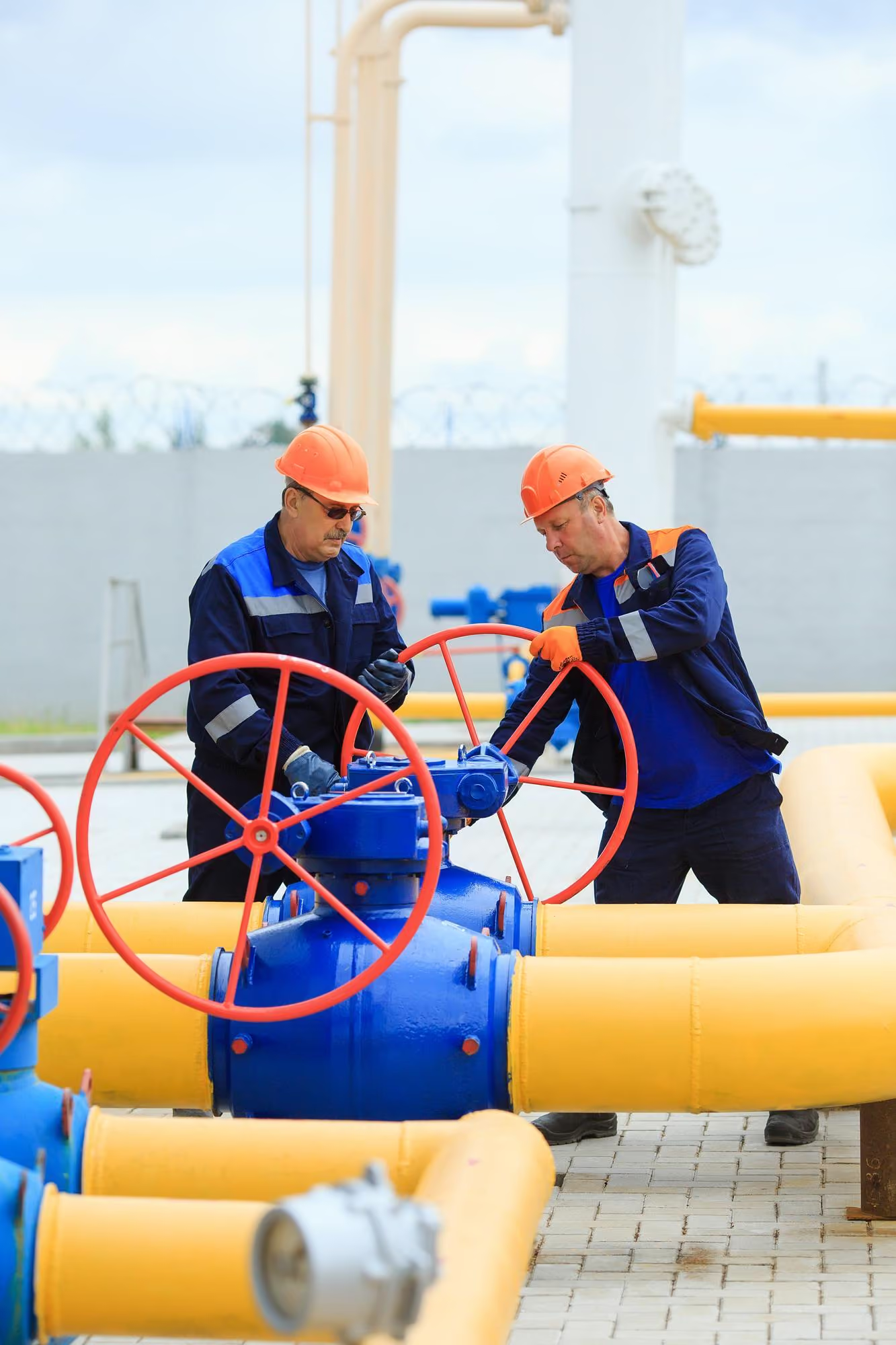
Oil and gas, utilities, and energy organisations in Saudi Arabia and the GCC operate at a scale and complexity that makes enterprise transformation uniquely demanding. Asset portfolios are vast. Operations are geographically dispersed. Regulatory and safety compliance requirements are non-negotiable. And the cost of operational disruption during a transformation is measured not in project delays but in production loss. ERP and operational transformation in this sector fails when the operating model is treated as a given rather than as the primary design challenge. Maintenance strategies are not standardised before asset management systems are configured. Procurement governance across sites and entities is not defined before supply chain systems go live. The result is a system that reflects operational complexity rather than resolving it.
What Transformation Looks Like in Oil & Gas and Utilities
Asset and maintenance management
Reactive maintenance culture with no predictive capability or structured asset history

Procurement and supply chain complexity
Multi-site, multi-vendor procurement with insufficient governance and visibility

Project cost and schedule control
Capital project cost overruns due to fragmented project accounting and governance

Regulatory and HSE compliance
Safety, environmental, and regulatory reporting managed through manual processes

Field operations governance
Geographically dispersed field teams operating with inconsistent processes and systems

Financial management complexity
Multi-entity, multi-currency reporting across JVs, subsidiaries, and production sharing agreements

Executive operational visibility
Leadership receives lagging operational data that does not support real-time decisions

How Terracez Works With Oil & Gas and Utilities Organisations
Terracez applies the Transformation Intelligence Framework™ with specific attention to the asset governance, operational readiness, and safety compliance requirements of the energy sector.
Before Implementation Begins
- Executive alignment is confirmed across operations, finance, maintenance, and HSE leadership
- The asset operating model is defined: maintenance strategy, work order governance, and asset hierarchy
- Procurement governance is assessed: multi-site purchasing controls, vendor management, and compliance requirements
- Data quality across asset registers, maintenance history, and procurement records is evaluated
- HSE and regulatory compliance requirements are mapped for Saudi Arabia and UAE operations
- Integration requirements between field operations, maintenance, finance, and project management are identified
During Implementation
- Asset hierarchies, maintenance strategies, and procurement governance structures are configured before any other module work begins.
- Field operations configuration reflects how technicians and engineers actually work — including offline capability for remote sites.
- Customisation is minimised to protect upgrade paths and reduce operational risk.
After Go-Live
- Terracez monitors asset performance KPIs, field adoption, maintenance compliance, and procurement governance through the Alignyx platform.
- The objective is measurable improvement in asset uptime, procurement control, and operational visibility — not simply a completed implementation.

Dynamics 365 Applications for Oil & Gas and Utilities
Why Oil & Gas and Utilities Organisations Choose Terracez




Trusted by brands across industries

"Terracez helped us to achieve the business critical requirement of upgrading AX 2012 to D365 within our timelines. It was important for us to completely upgrade in 2 months which they achieved well before, where other MS partners told was not possible to do."
"Terracez team is a great consultancy, which follows an agile approach to solve any kind of business issues. We are adding a lot of automation with their experienced and highly-skilled team in the manufacturing domain."
"We wanted a partner to support in transitioning SATS’ processes to comply with the new regulation quickly. Terracez understood our business and helped us in enabling the process efficiency without compromising on compliance."

Is Your Organisation Ready to Transform Operations Without Disrupting Them?
Every engagement begins with a structured conversation about operational priorities and transformation readiness.