

.png)


In brief: Compare Dynamics 365 and SAP for UAE mid-market manufacturers across cost, speed, Microsoft integration, localisation, scalability and fit.
The UAE ERP market is growing fast. Research and Markets projects it will expand from USD 2.14 billion in 2023 to USD 3.45 billion by 2028, driven by cloud adoption, AI-driven automation, and a national push towards digital transformation. For manufacturers in that market, the pressure to upgrade or replace legacy systems has never been more real.
But the question most manufacturers are actually trying to answer is not which ERP has more features. It is which platform gives us the fastest path to operational control, financial visibility, and VAT compliance, without the implementation drag and cost overhead that derails mid-market projects before they deliver value.
That is the question this comparison is designed to answer.
Key takeaways from this guide:
- Who this comparison is written for, and where SAP remains the stronger choice
- The five criteria that actually determine ERP fit for UAE manufacturers
- How Dynamics 365 and SAP compare on cost, implementation speed, reporting, localisation, and scalability
- A clear recommendation, with the honest caveats that most comparison pieces leave out
Who this comparison is for, and when SAP may still make sense
This guide is written for mid-market manufacturers in the UAE, typically businesses with 50 to 1,000 employees, that are evaluating ERP for the first time or replacing a system that has outgrown their operations. If your priorities include faster planning cycles, better costing visibility, tighter stock control, and reporting that your finance and operations teams can actually use, this comparison is relevant to you.
This guide applies if your business:
- Has 50 to 1,000 employees and is growing into more complex operations
- Needs ERP that can be deployed without a multi-year implementation programme
- Relies on Microsoft tools like Excel, Teams, or Power BI for day-to-day work
- Requires UAE VAT compliance and local audit readiness out of the box
- Wants a platform that scales with the business without forcing a replatform in three years
SAP may still be the right choice if:
- You operate multiple manufacturing plants across several countries with heavy process standardisation requirements
- Your business already runs a significant SAP environment and migration costs outweigh the benefits of switching
- You have dedicated SAP specialists in-house and need the deepest possible enterprise process depth
The recommendation in this guide is not anti-SAP. It is pro-fit. And for most UAE mid-market manufacturers in 2026, the fit points clearly in one direction.
The five decision criteria that actually matter
Most ERP comparison articles compare feature lists. That is not how manufacturing businesses make ERP decisions, and it is not how they should. A platform that looks powerful in a demo can still become a costly, slow, and wrong-fit decision in practice.
The five criteria below are what determine whether an ERP delivers value after go-live, not just in the sales cycle:
- Total cost of ownership - licensing, implementation, customisation, and ongoing support
- Implementation speed - how quickly the business reaches operational go-live and starts recovering value
- Reporting and analytics - whether non-technical managers can access the data they need without specialist dependency
- UAE localisation and manufacturing fit - VAT compliance, audit readiness, and how well the platform maps to real operational workflows
- Scalability without overbuying - whether the platform grows with the business without forcing a costly replatform
These are the lenses we will use for the rest of this comparison.
1. Total cost of ownership: why Dynamics 365 is easier to justify
Cost is where the mid-market ERP decision often gets made, and where SAP most consistently loses ground to Dynamics 365 for businesses at this scale. Indicative licensing signals, which vary by scope, user count, and implementation partner, tell part of the story:
- Dynamics 365 Business Central starts at approximately USD 70 per user per month, with premium tiers around USD 100 per user per month
- SAP S/4HANA Cloud pricing signals typically sit materially higher, often in the USD 150 to USD 200+ per user per month rangerange
But licensing is rarely where the real cost difference lives. The more significant gap is in total deployment cost.
Where the TCO gap widens:
- Implementation overhead - SAP S/4HANA implementations for mid-market businesses can involve initial project budgets ranging from EUR 250,000 to EUR 2,000,000 depending on scope and complexity. Dynamics 365 deployments for comparable organisations tend to land in a narrower range, commonly around USD 150,000 to USD 250,000 in total cost of ownership
- Customisation burden - SAP's architecture is powerful but requires more specialist customisation effort to fit mid-market manufacturing workflows. Dynamics 365's modular design reduces that burden
- Internal resource cost - longer, more complex implementations absorb significant time from finance, operations, and IT leads. That hidden cost rarely appears in vendor proposals but is very real for a mid-market business
The honest caveat: All pricing figures in this guide are indicative signals based on published benchmarks and partner data. Your actual cost will depend on user count, process complexity, localisation requirements, and the implementation partner you choose. Get a scoped estimate before committing to any platform.
2. Implementation speed: why time-to-value matters more than you think
ERP implementation timelines can range from three months to eighteen months or longer, depending on platform, scope, and organisational readiness. For a mid-market manufacturer, that range is not academic. It is the difference between recovering value in the same financial year or absorbing cost and disruption for the better part of two years.
Dynamics 365 deployments for mid-market businesses commonly move within a three to five month window when scope is well-defined and the implementation partner has manufacturing experience. SAP S/4HANA implementations at comparable scope tend to run longer, particularly where customisation, data migration, and process standardisation requirements are more demanding.
Why implementation speed matters for UAE manufacturers specifically:
- Operational continuity - a shorter go-live window means less disruption to procurement, production planning, and finance reporting during the transition
- Change management - the longer an ERP project runs, the greater the risk of internal resistance, scope creep, and team fatigue before the system is even live
- Return on investment - every month before go-live is a month the business is still running on the old system and absorbing project cost without recovering value
- Competitive pressure - UAE manufacturers operating in a market growing at approximately 8.3% CAGR cannot afford to have their digital transformation programme stalled in a prolonged ERP implementation
Speed is not a shortcut. A well-scoped, well-executed Dynamics 365 implementation still requires rigour. But for mid-market manufacturers, a platform that is designed for faster deployment is a structural advantage, not just a sales point.
3. Reporting, Power BI, and the Microsoft stack advantage
One of the most underrated factors in ERP selection is what happens after go-live, specifically, whether the people who need data can actually get it without raising a support ticket or waiting for a specialist to build a report.
This is where Dynamics 365 creates a structural advantage for most UAE mid-market manufacturers.
The practical Microsoft stack benefit:
- Familiar tools, lower resistance - most UAE manufacturing teams already use Excel, Outlook, and Teams daily. Dynamics 365 sits inside that same ecosystem, which means user adoption is faster and the learning curve is shallower than moving to an entirely new environment
- Power BI integration - finance managers, operations leads, and supply chain teams can build and access live dashboards without needing a developer or a data analyst. For a growing manufacturer, that kind of self-serve visibility is operationally significant
- Microsoft Copilot - AI-driven features built into Dynamics 365 in 2026 include predictive inventory insights, automated financial summaries, and procurement recommendations. These are not add-ons; they are part of the platform
- Reduced specialist dependency - SAP reporting environments often require dedicated SAP specialists or consultants to build and maintain custom reports. Dynamics 365 reduces that dependency for mid-market teams that do not have large IT departments
What this means in practice: A production manager who can pull their own weekly output variance report in Power BI, without waiting two days for IT, is a tangible operational improvement. That kind of accessibility compounds over time as the business grows and reporting needs increase.
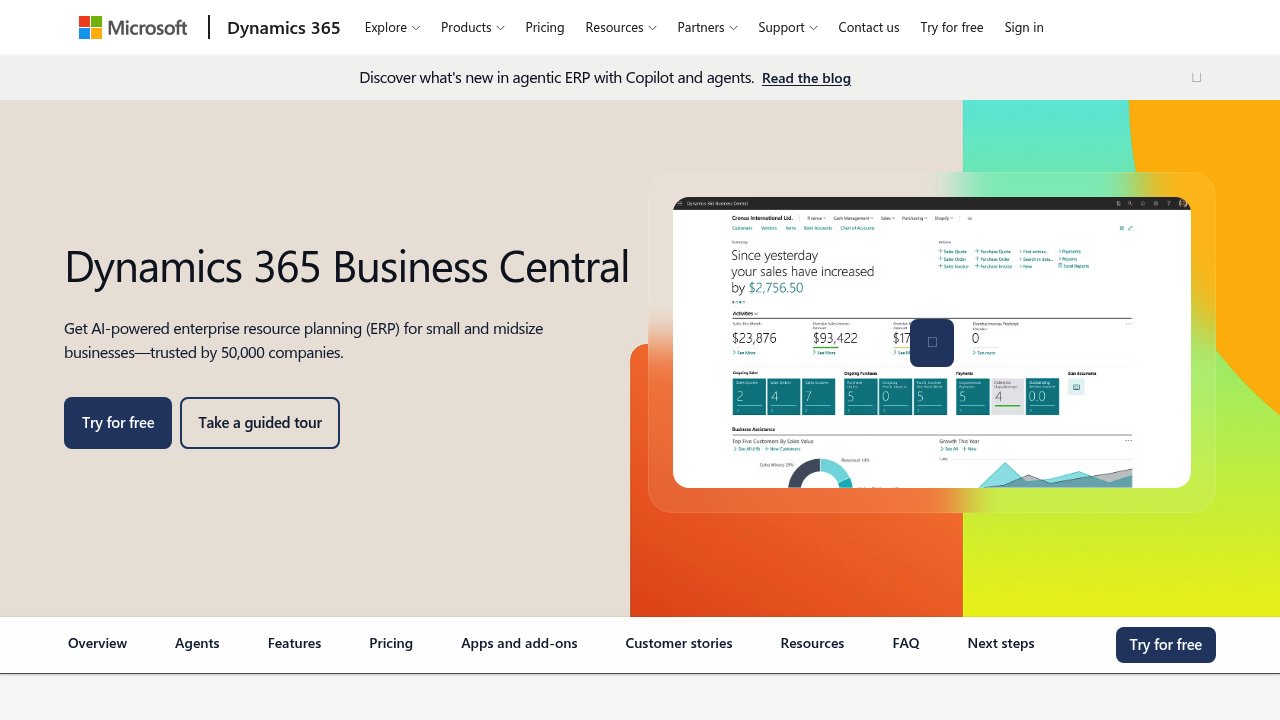
4. UAE localisation and manufacturing practicality
For a manufacturer operating in the UAE, ERP localisation is not a nice-to-have. VAT compliance, audit trail requirements, Arabic language support, and local regulatory reporting are operational necessities. An ERP that handles these well out of the box reduces risk. One that requires extensive workarounds adds cost and implementation time before the business sees any value.
Key localisation requirements and how Dynamics 365 addresses them:
- VAT compliance - Dynamics 365 includes UAE VAT configuration as part of its localisation layer, covering tax codes, return preparation, and FTA-aligned reporting formats. This reduces the customisation burden that some mid-market manufacturers encounter with platforms not natively designed for the region
- Arabic language support - the platform supports Arabic interface options and right-to-left document formatting, which matters for businesses with mixed Arabic and English-speaking teams
- Audit readiness - built-in audit trails, document management, and financial controls support the compliance requirements that UAE manufacturers face during FTA audits and external financial reviews
- Manufacturing workflow fit - Dynamics 365's modular architecture means manufacturers can activate the specific modules relevant to their operations, whether that is production orders, bill of materials management, warehouse control, or procurement, without being locked into a monolithic configuration that requires months of customisation to make usable
The practical implication: A UAE manufacturer that goes live on a platform with strong local compliance support spends less time on post-implementation fixes and more time on the operational improvements the ERP was supposed to deliver.
5. Scalability without overbuying: the strongest case against SAP for this audience
SAP's scale is real. For the right organisation, it is genuinely the most capable ERP on the market. But scale only creates value when the business actually needs it. Buying maximum ERP for a theoretical future state is one of the most common and expensive mistakes mid-market manufacturers make.
The objection and the honest response:
- "But what if we grow into it?" - Growth is a reason to choose a scalable platform, not an argument for buying enterprise complexity you cannot absorb today. Dynamics 365 scales across users, modules, and connected applications. A manufacturer that starts with finance and production can extend into advanced warehousing, field service, or customer engagement without replatforming
- "SAP is what large manufacturers use." - That is true, and it is relevant context. But most UAE mid-market manufacturers are not large manufacturers yet. Buying an enterprise platform before the business has the internal capability, specialist resource, and process maturity to use it creates a system that is underutilised and over-resourced
- "We do not want to migrate again in five years." - A well-implemented Dynamics 365 environment, built on Azure and connected to the Microsoft ecosystem, is not a stepping stone. It is a long-term platform that has supported manufacturers well beyond the 1,000-employee mark
The sharper point: The smarter growth decision is to buy enough ERP for the next stage of the business, implement it well, and build operational capability on a platform your team can actually use. That is a more reliable path to value than purchasing maximum enterprise depth and spending the next two years trying to configure it into something manageable.
When SAP is the better choice
This guide has made a clear case for Dynamics 365, but the honest version of that case includes acknowledging where SAP genuinely wins.
SAP S/4HANA is the stronger choice when:
- The business operates multiple manufacturing plants across different countries and requires deep, standardised process governance at enterprise scale
- The organisation already runs a significant SAP environment across finance, procurement, or HR, and the cost and risk of migrating to a new platform outweighs the benefits
- The manufacturing operation has highly complex, industry-specific process requirements, such as discrete manufacturing at very large scale, process manufacturing with tight batch traceability, or regulated industries where SAP's compliance depth is the deciding factor
- The business has dedicated SAP specialists in-house and can absorb the implementation and customisation overhead that comes with the platform
If any of these conditions apply to your business, a Dynamics 365 comparison article is not the right starting point. You need a structured ERP selection process that evaluates both platforms against your specific operational requirements, with realistic cost and timeline modelling for each.
Final verdict: why Dynamics 365 beats SAP for most UAE mid-market manufacturers in 2026
For a UAE mid-market manufacturer with 50 to 1,000 employees, the ERP decision in 2026 is not about which platform is theoretically more powerful. It is about which platform delivers operational control, financial visibility, and VAT compliance at a cost and pace the business can actually absorb.
On every criterion that matters for this audience, Dynamics 365 comes out ahead:
- Lower total cost of ownership with more predictable deployment budgets
- Faster implementation with less disruption to operations during transition
- Microsoft-native reporting that finance and operations teams can use without specialist dependency
- Strong UAE localisation covering VAT, audit readiness, and Arabic language support
- Scalable architecture that grows with the business without forcing a replatform
Before committing to any ERP platform, make sure you have:
- A clear picture of your current process gaps across planning, costing, stock, and reporting
- Realistic implementation timelines and total cost estimates from a qualified partner
- An honest assessment of your internal change management capacity
- A go-live scope that delivers value quickly rather than trying to implement everything at once
If you are shortlisting ERP platforms for your UAE manufacturing business and want an honest assessment of where Dynamics 365 fits your specific operations, book an ERP readiness assessment with Terracez. We work with mid-market manufacturers across the UAE and help businesses make the right platform decision before committing to a vendor.


.webp)

